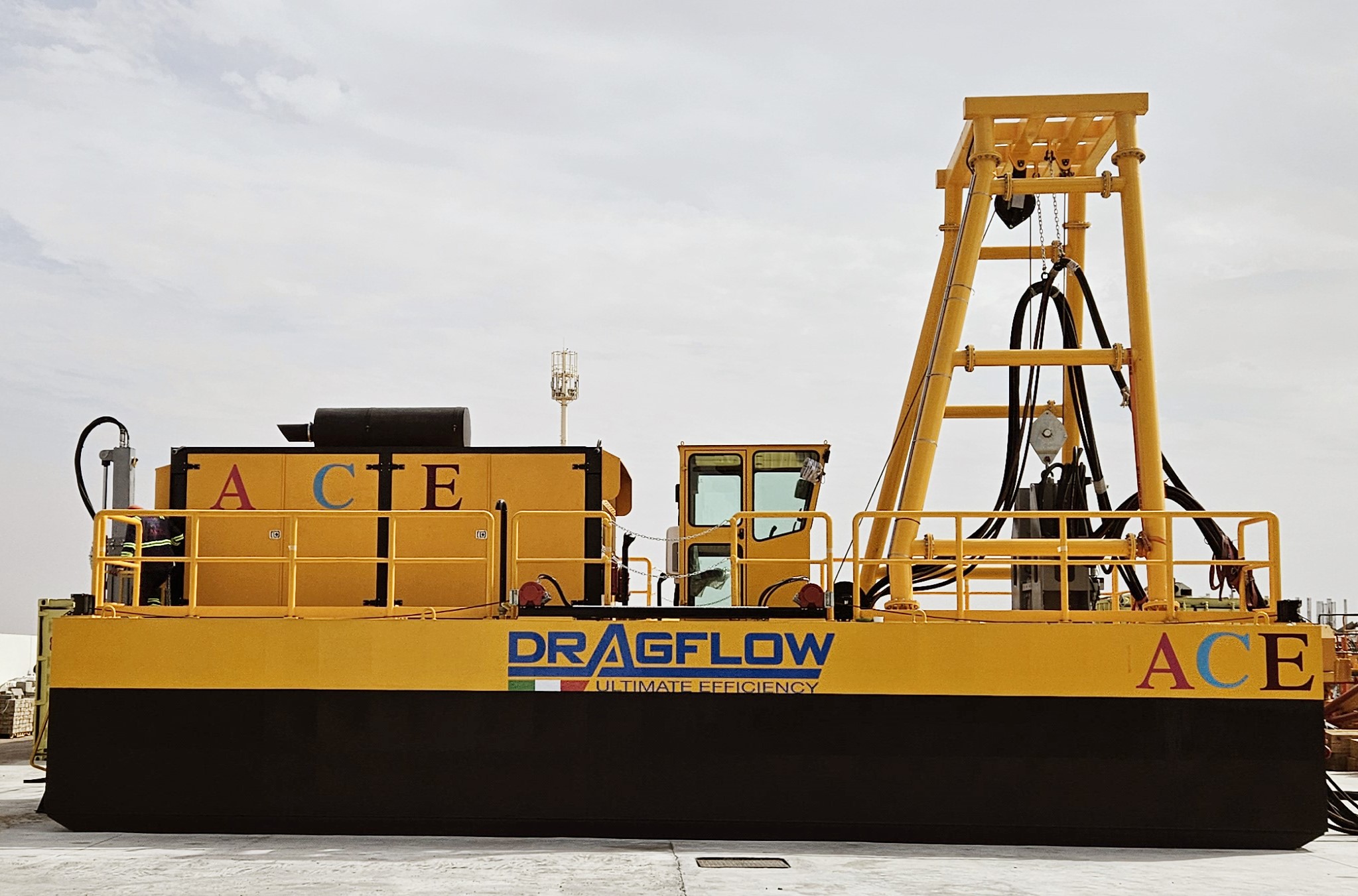
Effective dredging pipes, well-planned dredging procedures, and efficient methods for dredging silt from a pond are essential for maintaining waterways, reservoirs, and industrial sites. Advanced equipment like the DRH400 Self-Propelled Dredge with Steel Cables ensures that even the most demanding dredging operations are carried out with precision, efficiency, and durability.
DRH400 Self-Propelled Dredge with Steel Cables
Quote Now | Download Brochure
ACE Centro Enterprises (ACE) provides robust dredging solutions tailored for marine, mining, and oil & gas industries. The DRAGFLOW DRH 400 dredge with steel cables is equipped with the powerful Dragflow HY400 hydraulic dredging pump, making it ideal for handling the toughest dredging tasks.
This modular pontoon dredger is designed to operate efficiently at various depths and in challenging slurry conditions, including low pH environments. It is widely used across the Arabian Gulf, Middle East, and African markets for large-scale dredging projects.
Key Features
Self-Propelled System with Steel Cables
Ensures stability and precise positioning during deep dredging operations.
Advanced Hydraulic Pump (HY400)
Capable of handling high-density slurry mixtures including mud, silt, sand, and gravel.
Modular Pontoon Design
Allows flexibility and easy deployment in diverse environments such as lakes, ports, and offshore platforms.
High Chrome Alloy Components
All wear parts are engineered for maximum durability and extended service life.
Advanced Seal System
Features a unique lip seal with Teflon layers to resist both high and low pH conditions.
Product Specifications
Slurry Handling: Up to 1.7 specific gravity
Solids Handling Size: 20 mm to 120 mm
Flow Rate: Up to 4000 m³/hr
Pumping Distance: Up to 1500 m (extended with booster pumps)
Dredging Depth: Up to 300 m
Operating Speed: Low speed for reduced wear
Motor Protection: Optional temperature and moisture sensors
Power Options: Electric (50 Hz / 60 Hz) and hydraulic
Manufacturing: 100% Italian castings with high-quality metallurgy
Role of Dredging Pipes
Dredging pipes are critical for transporting slurry from the dredging site to the discharge area. High-quality pipes ensure:
Efficient material flow over long distances
Minimal leakage and pressure loss
Durability against abrasive materials
Compatibility with booster pump systems
Standard Dredging Procedures
Proper dredging procedures are essential for safe and effective operations:
Site Assessment – Analyze sediment type, depth, and environmental conditions
Equipment Setup – Deploy dredger, pipes, and support systems
Agitation and Suction – Use the pump agitator to loosen compacted materials
Slurry Transport – Transfer material through dredging pipes
Disposal or Reuse – Deposit dredged material at designated locations
Dredging Silt from a Pond
Removing accumulated silt is crucial for restoring water capacity and quality. The DRH400 dredger simplifies dredging silt from a pond by:
Efficiently agitating and suspending fine sediments
Pumping high-density slurry without clogging
Operating in shallow or deep water conditions
Minimizing environmental disruption
Applications
The DRH400 dredging system is suitable for a wide range of industries and projects:
Deep sea harbor dredging
Canal and lake cleaning
Sand reclamation
Mine tailings removal
Offshore platform maintenance
Oil spill response
Dam and dike construction
Sewage and wastewater management
Quarrying and tunneling
Environmental pollution control
Conclusion
The DRH400 Self-Propelled Dredge with Steel Cables, powered by advanced Dragflow pump technology, is a high-performance solution for modern dredging challenges. Combined with efficient dredging pipes and structured dredging procedures, it delivers reliable results in applications ranging from harbor maintenance to dredging silt from a pond.
Dredging Pipes Dredging Procedures Dredging Silt from a Pond