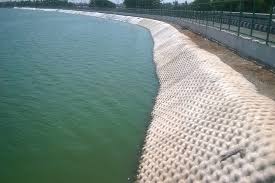
Concrete Mattresses and Geotextile Sand Bags for Erosion Control
Concrete Mattresses and Geotextile Sand Bags are versatile solutions for soil stabilization, erosion control, shoreline protection, and marine construction. Manufactured from high-strength geotextile fabrics, these products can provide practical protection for embankments, slopes, waterways, pipelines, and coastal areas.
Geotextiles are permeable polypropylene or polyester fabrics designed to perform functions such as filtration, separation, protection, and selective drainage. They can be incorporated into construction systems to improve soil stability and provide protection against erosion.
What Are Geotextile Sand Bags?
Geotextile Sand Bags are fabric containers designed to be filled with sand or other suitable materials to create protective barriers. They offer a cost-effective approach to shoreline armoring and can be stacked to form stable structures that help reduce the effects of coastal erosion.
Depending on the project requirements, geotextile sand bags can be used in applications involving:
Shoreline protection
Coastal erosion control
Bank stabilization
Slope protection
Embankment protection
Temporary or permanent barriers
Marine construction
Their flexibility allows them to conform to site conditions while providing a practical alternative to conventional erosion-control materials in suitable applications.
Concrete Mattresses for Erosion Protection
Concrete Mattresses are flexible geotextile systems designed to create a protective concrete layer over soil, slopes, channels, and other surfaces.
Geotextile grout bags and concrete mattresses are manufactured from double-layer, high-strength polyester and polyamide fabrics. They are supplied in rolls or configurations of varying sizes and incorporate filling vents that facilitate installation and concrete placement.
During installation, concrete is pumped or poured through the filling vents. Excess water can escape through the fabric pores while the concrete remains within the mattress, creating a flexible concrete protection layer.
How Concrete Mattresses Work
The installation process is designed to allow concrete to be contained within the geotextile formwork.
The concrete mattress is positioned over the area requiring protection.
The mattress is secured according to the project's installation requirements.
Concrete is introduced through the designated filling vents.
Excess water passes through the fabric pores.
The concrete remains contained within the mattress.
After curing, the system forms a protective concrete layer.
This flexible formwork approach can be particularly useful where conventional rigid concrete placement would be difficult or impractical.
Applications of Concrete Mattresses
Concrete mattresses and geotextile grout bags can be used in a variety of civil, marine, and erosion-control applications, including:
Embankment Protection
Concrete mattresses can help protect embankment surfaces from water movement and erosion when properly designed and installed.
Bank and Slope Stabilization
Geotextile systems can provide surface protection for banks and slopes exposed to erosion. The appropriate system should be selected based on site conditions, hydraulic forces, soil characteristics, and engineering requirements.
Canal and Reservoir Protection
Concrete mattresses can be used to provide protective linings for suitable canal, reservoir, and water-management applications.
Dam and Coastal Protection
For suitable dam and shoreline applications, concrete mattresses and Geotextile Sand Bags can help create protective barriers against erosion and water movement.
Underwater Pipeline Protection
Concrete mattresses can be used for the protection and ballast of underwater pipelines, helping provide stability and protection in suitable marine environments.
Flexible Formwork for Underwater Concrete
One of the key advantages of geotextile concrete mattresses is their use as flexible formwork for underwater cement mixture injection.
The fabric contains the concrete while allowing excess water to escape through its pores. Once cured, the concrete-filled mattress forms a protective structure that can conform to the contours of the installation area.
This makes the technology useful for certain underwater construction, stabilization, and protection projects.
Geotextiles in Construction and Marine Applications
Geotextiles are used across several industries because of their ability to perform different functions within soil and structural systems.
Common application sectors include:
Construction
Marine engineering
Petrochemical projects
Quarrying
Coastal engineering
Water infrastructure
Erosion control
Depending on the product and design, geotextiles can provide filtration, separation, drainage, protection, and soil reinforcement.
Benefits of Geotextile Sand Bags and Concrete Mattresses
When appropriately specified for a project, these systems can offer several advantages:
Flexible installation
Effective erosion-control potential
Adaptability to uneven surfaces
Suitable options for marine environments
Concrete containment through geotextile formwork
Practical shoreline armoring
Protection for banks, slopes, and embankments
Potentially efficient installation compared with some conventional systems
The correct product, dimensions, fabric strength, filling material, and installation method should be determined according to the project's engineering requirements.
Choosing the Right Erosion-Control Solution
The selection between Concrete Mattresses, grout bags, and Geotextile Sand Bags depends on the specific application. Factors such as water velocity, wave action, soil conditions, slope geometry, required service life, loading conditions, and installation environment should be evaluated before selecting a system.
For demanding marine and civil engineering projects, proper site assessment and engineering design are important to ensure the selected geotextile solution performs as intended.
Concrete Mattresses and Geotextile Sand Bags for Erosion Control